Real estate is one of those industries where people decide how much they trust you before you finish your sentence. And yeah, your card is a small thing. But the small things do a lot of heavy lifting.
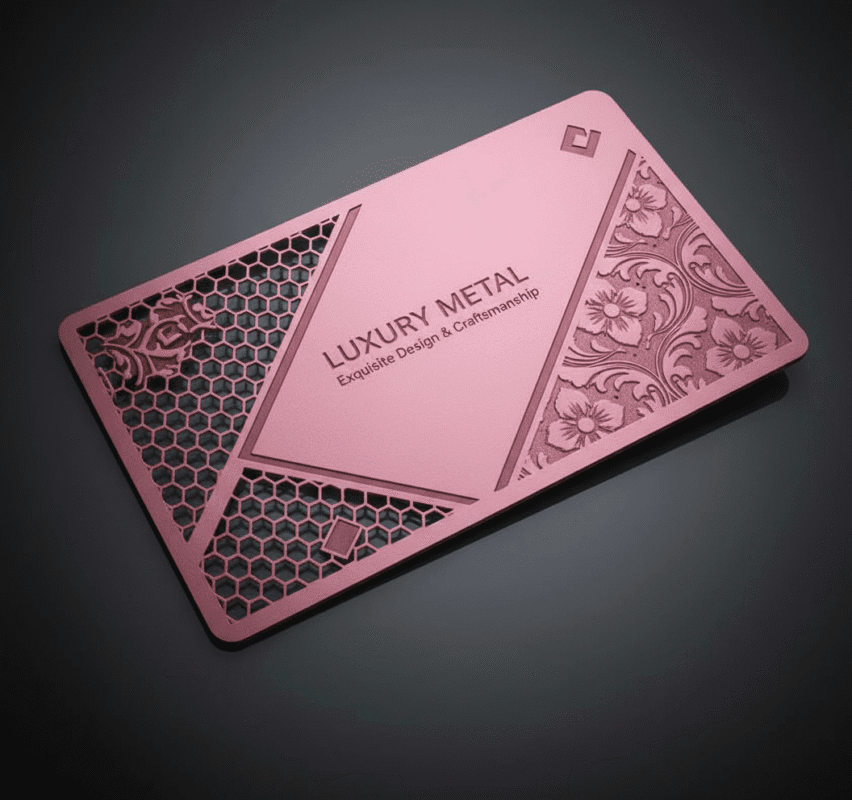
Metal business cards don’t just “look premium.” They feel like a decision. The weight, the sound when it hits a table, the way it doesn’t get fuzzy and bent after a week in someone’s pocket… that’s all messaging. Silent messaging, but still messaging.
One-line truth: a card that survives gets seen again.
Paper cards are forgettable. Metal isn’t.
That’s the opinion. I’ll stand by it.
Most paper cards live a short, tragic life: shoved into a purse, smudged by a coffee cup, corners curled, then tossed during a “clean out my wallet” moment. Metal Kards refuse that arc. They don’t crease. They don’t absorb moisture. They don’t fray into visual noise.
Now, this won’t apply to everyone, but… if you sell high-value property, your branding should feel high-value too. A flimsy card creates a weird disconnect. You’re asking someone to trust you with a six- or seven-figure decision and handing them something that looks like it came from a bulk print special.
The psychology is real (and kind of annoying)
Here’s the thing: people read objects the way they read people.
A heavier, more substantial card triggers the same mental shortcuts as a firm handshake or a well-tailored blazer. It’s not “fair,” but it’s consistent. In my experience, when a card feels expensive, the person holding it assumes you’re established, sometimes before they even look at your name.
And this isn’t just vibes.
A widely cited consumer behavior finding shows that tactile sensations like weight can influence perceived importance and seriousness, often called the “weight = importance” effect (Ackerman, Nocera & Bargh, 2010, Science). That’s not a real estate study, but the mechanism transfers cleanly: heft changes judgment.
Quick scene: open house math
You meet 30 groups. You hand out 25 cards. A week later, how many are still readable and still around?
Paper loses that game. Metal plays a different game entirely.
A metal card sticks around because it’s hard to throw away without noticing. It doesn’t blend into receipts and flyers. People show it to someone else (“Feel this card”), which is basically free referral energy.
Not every marketing tactic has to be scalable. Some just need to be memorable.
Durability isn’t sexy. Until it is.
You’re on the road. You’re in and out of cars. You’re sweating through suit jackets in summer. You’ve got clients spilling iced coffee in your passenger seat. Paper can’t handle normal life.
Metal does. Stainless steel and anodized aluminum are especially good at resisting:
– bending and corner damage
– water and humidity exposure
– ink rub-off (since many designs are etched/engraved instead of printed)
And you’ll replace them far less often. That’s a boring operational detail… right up until you realize replacements are also a branding tax. Every time you reorder because your cards look rough, you’re paying to fix an avoidable impression problem.
Tech on the card: useful, not gimmicky
I’m skeptical of gimmicks. NFC and QR aren’t gimmicks if they’re tied to a clear follow-up action.
A metal card can do what paper usually can’t do well: become a bridge into your workflow. Tap, scan, and suddenly your prospect has the right link, not the wrong Instagram profile from a rushed search.
A few integrations I’ve seen work in the real world:
NFC tap
– Adds contact to phone instantly (vCard)
– Opens a listing page or “featured properties” hub
– Routes to a calendar booking link for consults
QR code
– Better for cross-device scanning at events
– Easy to track with UTM links
– Can rotate destinations without reprinting (if you use a short link)
Look, the point isn’t the technology. The point is frictionless follow-up. If your card turns into an appointment while you’re still standing there, that’s a win.
Wallet fit, weight, and the “will they carry it?” question
Metal cards used to be thick novelty slabs. The better ones now are wallet-friendly, often around standard card dimensions, just stiffer and more durable.
Still, weight matters in a practical sense. Too heavy and people leave it on the counter. Too sharp on the edges and it feels annoying. You want “premium” not “weaponized.”
A good manufacturer will round edges and keep thickness reasonable. If they don’t offer that, move on.
Materials and finishes (the specialist briefing you didn’t ask for)
Material choice isn’t just cost. It’s brand language.
Aluminum
Lightweight, modern, usually the most budget-friendly. Great if you want clean and contemporary without feeling flashy.
Stainless steel
Heavier, serious, “corporate premium.” Excellent wear resistance. If you want to project stability, this is the default choice.
Brass
Warm tone, old-school luxury vibe. It can patina over time, which some people love and others hate (decide which camp you’re in).
Titanium
High strength-to-weight, expensive, subtle flex. Feels like “I don’t need to show off, but I could.”
Finish selection changes how it performs in the wild:
– Brushed hides fingerprints and micro-scratches
– Polished looks dramatic but shows handling quickly
– Matte reads modern and reduces glare under bright open-house lighting
– Sandblasted adds grip and a softer visual texture
If you’re adding engraving, deeper etch tends to stay readable longer than surface printing. That’s one of those unglamorous production details that makes the card feel “legit” six months later.
“Eco-friendly metal” sounds contradictory, but…
Metal production has an environmental footprint. No debate there. But durability changes the equation, because longevity reduces replacement frequency. If you hand someone a paper card every time you meet them twice (because the first one got wrecked), you’re doubling waste.
Aluminum and stainless steel also have well-established recycling pathways in most markets, which helps at end-of-life. The more honest sustainability angle is: buy fewer, keep them longer, stop treating business cards like disposable flyers.
That’s the sustainable move, not the marketing label.
A slightly unpopular take on budgeting
Metal cards don’t need to be for everyone on your team.
I’ve watched top-producing agents use metal cards strategically: reserved for high-intent prospects, luxury listings, referral partners, developers, attorneys. Paper (or a simple QR handout) can handle the casual, high-volume interactions.
You don’t win by spending the most. You win by matching the object to the moment.
Final thought, no pep talk
A metal business card won’t fix weak service, sloppy follow-up, or a thin value proposition.
But if your brand promise is “I’m the person you can trust with a big decision,” then handing someone a card that feels permanent is a surprisingly effective way to make that promise believable before you even get to the pitch.